
Whisker Mobile Application
Turning a Robot App Into a Pet-Centered Experience
When I joined Whisker, the mobile app primarily functioned as a remote control for the hardware. Users could start cycles and adjust settings, but engagement plateaued. Through research and behavioral analysis, we uncovered a critical insight: customers didn’t want more ways to control a robot. They wanted a better understanding of their cats.
I led a strategic shift from device control to data intelligence, aligning executive leadership around the need for a scalable architecture capable of transforming raw behavioral data into meaningful insights. By grounding the opportunity in usage patterns and pairing it with a clear product vision, we reframed the roadmap and repositioned the app around health, behavior, and long-term value.
This pivot laid the foundation for longitudinal trend tracking, pattern recognition, and AI-powered cat identification. The result was a move beyond robotics utility toward a trusted care platform designed to help owners better understand their pets.
Reframing the Product Strategy
The challenge was structural. The existing app framework wasn’t designed to support deeper insights or scalable data interpretation. It was built for control, not understanding.
To make the case for change, I created a presentation for executive leadership and product management that paired data with storytelling. To illustrate the risk of forcing future capabilities into the existing system, I borrowed a clip from MythBusters, the classic “you can’t fit ten pounds of… stuff… into a five-pound bag.” In this case, the “stuff” was behavioral data.
I edited the clip, rewrote the voiceover, and used it as a light but pointed reminder that the future depended on building a scalable foundation rather than cramming insight into an app never designed to support it.
There was understandable tension in the room. This meant significant investment and a shift in how value would be delivered. I grounded the conversation in data, showing clear usage patterns and opportunity areas, then followed with a vision video demonstrating how the strategy could come to life. That combination of evidence, narrative, and a bit of humor aligned the room and unlocked momentum. The direction was green-lit.
From Robotics to Real Pet Insights
That decision marked a meaningful shift. The robots remained important, but they moved to the passenger seat as the experience focus shifted toward the cats.
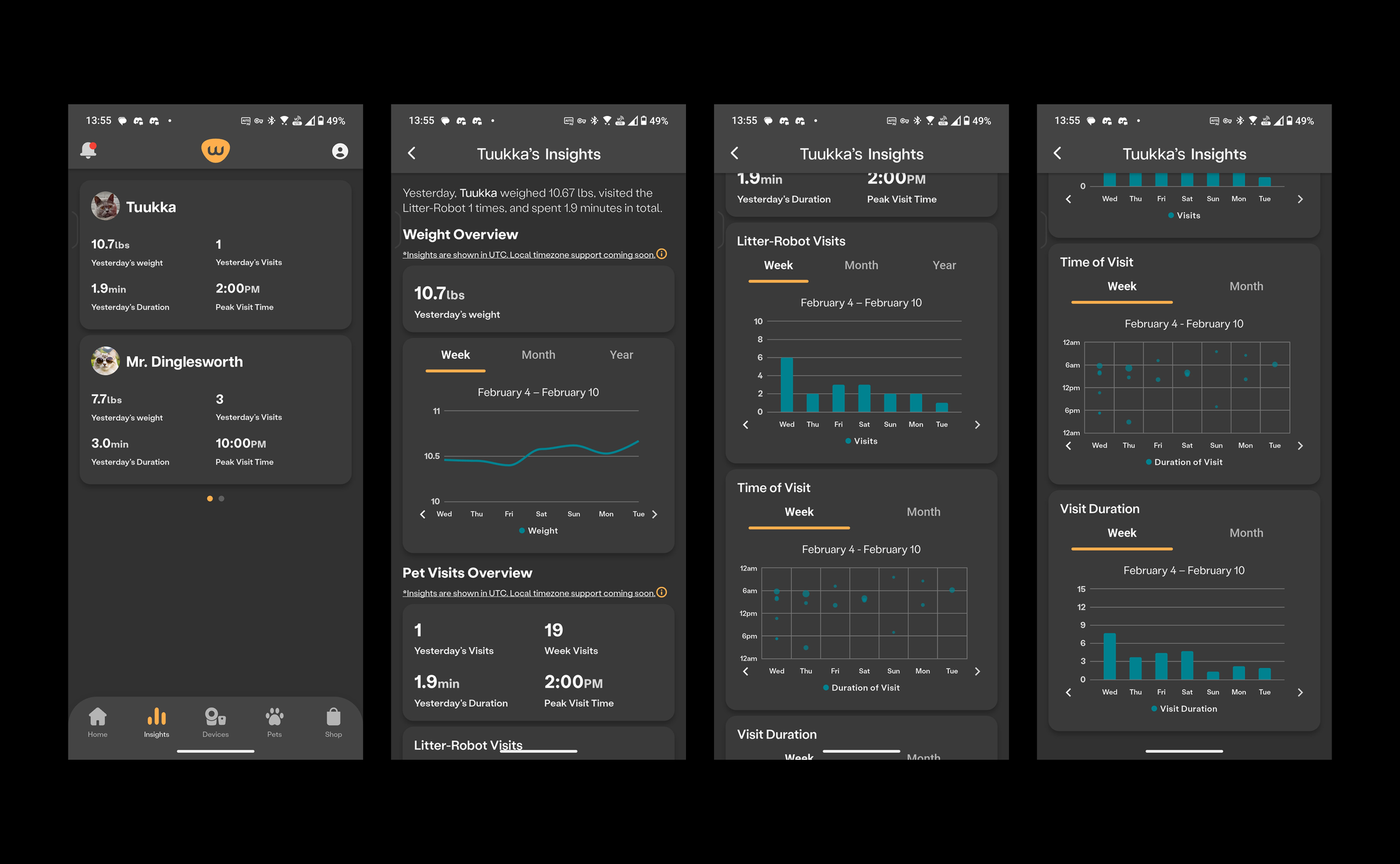
The new strategy centered on transforming raw, unstructured behavior data into meaningful insights. Changes in frequency, timing, duration, weight, and other signals from bathroom visits could now be analyzed over time. Paired with owner-reported inputs, the system could surface emerging patterns and help owners spot unusual behaviors that might signal a change in their pet’s health.
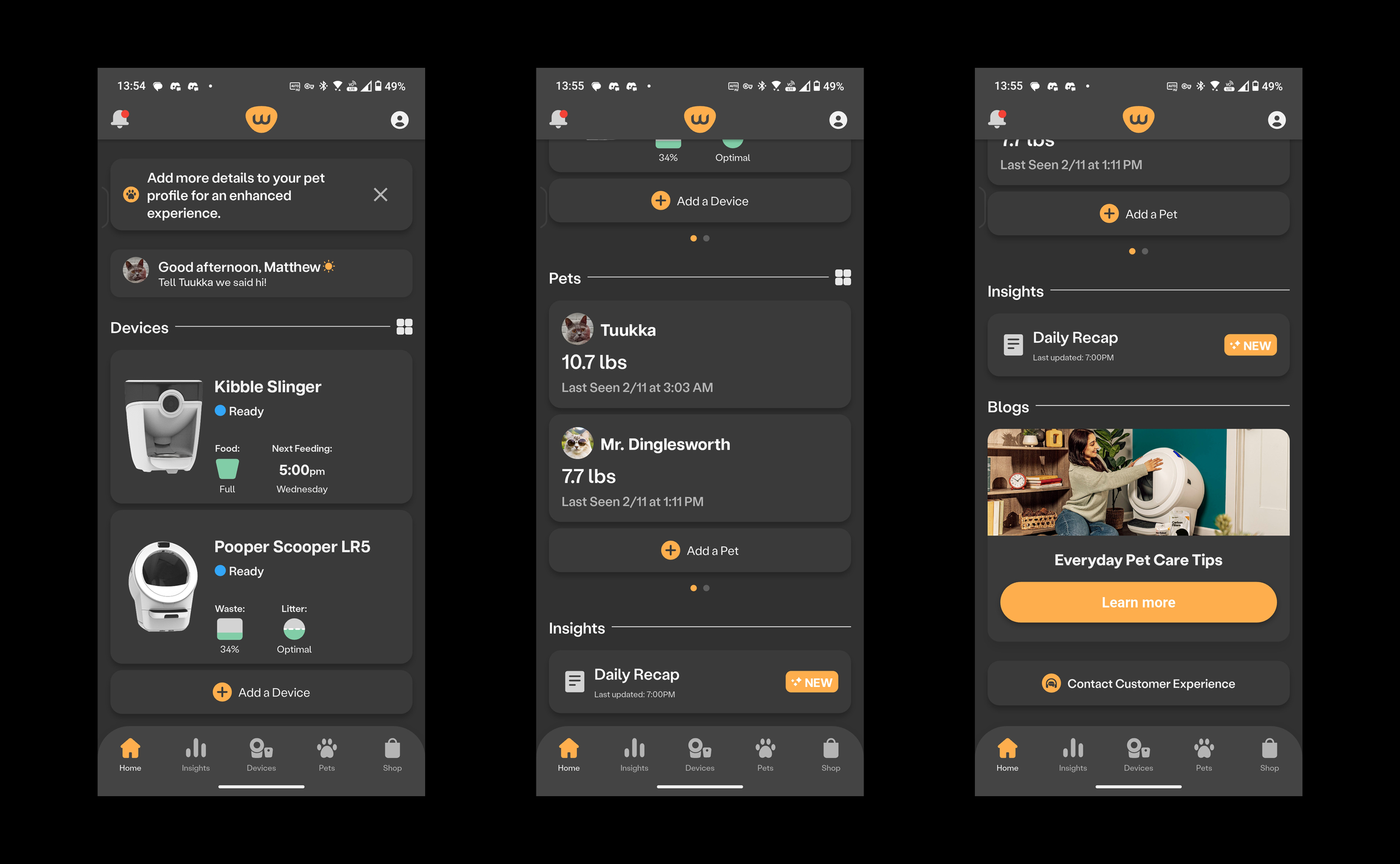
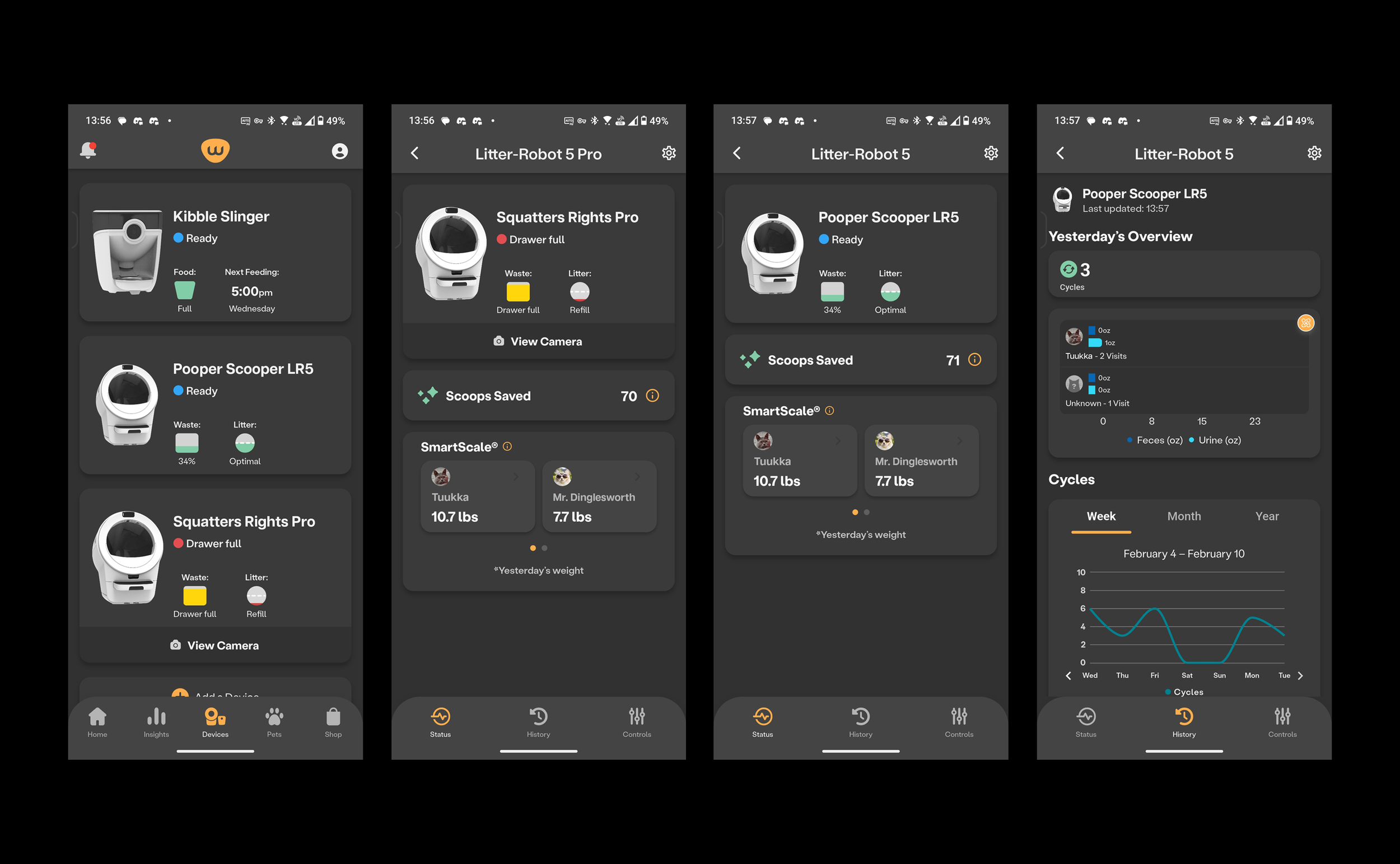
To support this new model, we introduced a redesigned home experience that functioned as a centralized dashboard. Instead of navigating through notifications, owners could immediately understand what required their attention. The home screen surfaced important insights about their cats’ activity, and the operational status of their robots, whether it was time to empty the waste drawer, add litter, or refill food.
Even in early stages, users shared stories of detecting emerging health concerns through Whisker products. Those stories validated the direction and reinforced the emotional weight of the work. This wasn’t about feature expansion. It was about trust and care.
The latest Pro model extended this vision further. With dual cameras, one outside the litter box and one inside, and a custom cat-detection LLM capable of recognizing individual cats with high certainty from minimal embeddings, owners gained a clearer window into their pets’ lives.
This work helped lay the foundation for a future where pet owners can make better decisions, catch issues earlier, and feel more connected to the animals they care about. That shift, from controlling a device to understanding a living being, is the impact I’m most proud of.
Disclosure
Selected images, video content, and application screen captures are the property of Whisker and are used here for portfolio purposes only.
All work shown was created during my employment at Whisker and reflects collaborative efforts with cross-functional teams.
Only materials that have been publicly released or are currently available in the public version of the Whisker mobile application are included. No confidential or proprietary information is disclosed.
All trademarks, product names, and brand elements are the property of their respective owners.